· Mihir Disposables
Chef Caps vs Buffet Caps: Which Headwear Does Your Kitchen Need?
Chef caps, bouffant caps and skull caps explained for hotel kitchens, caterers and banquet teams, with advice on sizes, materials and how many to order.
Hair covering is one of the simplest food safety measures in any kitchen, and one of the most visible to guests. But "cap" can mean several different products. Here is a quick guide for hotel kitchens, caterers and banquet teams.
The tall chef cap
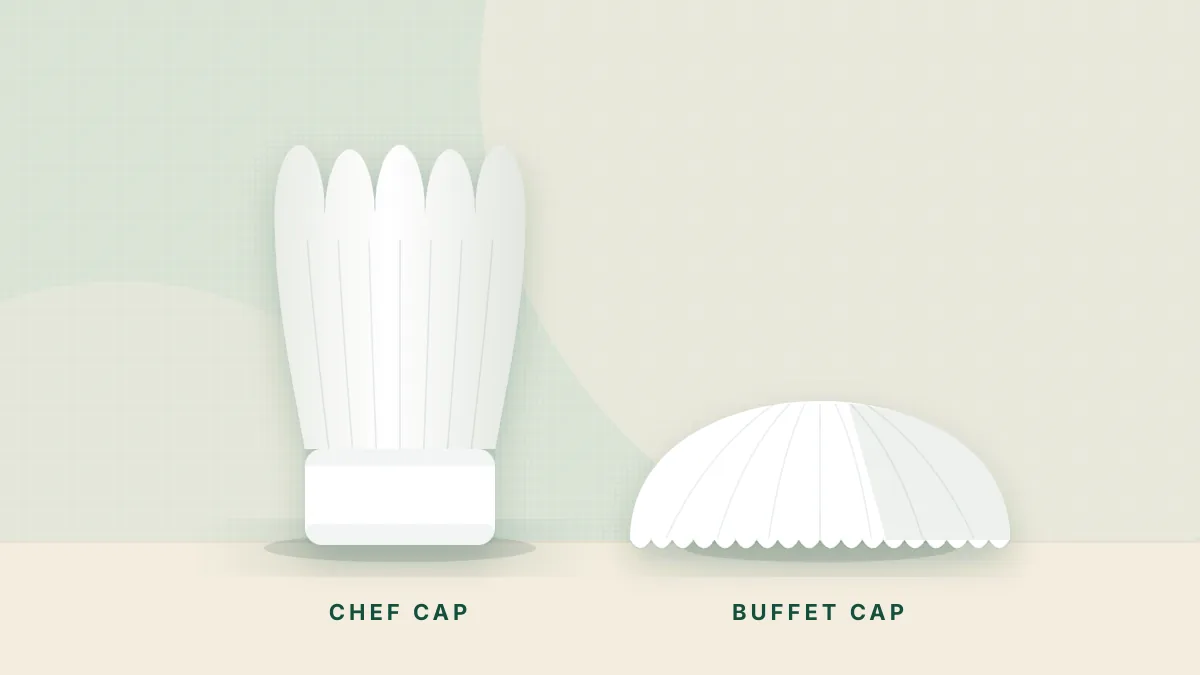
The pleated chef cap is the classic white toque. It is worn by chefs and cooks, especially where guests can see them: live counters, open kitchens and wedding buffets. Taller caps (around 12 inches) are often reserved for head chefs and live-counter chefs because they look impressive in photographs.
Best for: chefs, live counters, open kitchens, events.
The flat-top or skull cap
A low-profile cap without a tall crown. It is more practical for prep and line cooks who work under hoods or in tight spaces.
Best for: kitchen prep, line cooks, bakeries.
The buffet or bouffant cap
A soft, pleated cap with an elastic edge that covers all of the hair. Also called a mob cap. It is light, inexpensive and comfortable for long shifts.
Best for: servers, helpers, buffet counter staff, prep and packing teams.
Paper or non-woven?
Paper chef caps hold a crisp, upright shape and are the standard for presentation. Non-woven caps feel softer and breathe better in hot kitchens. Buffet caps are almost always non-woven.
How many should you order?
Disposable caps are usually replaced every shift or every event.
- Caterers: one cap per staff member per event, plus 10% spare
- Hotel kitchens: one per cook per shift, adjusted for days open
- Banquet halls: one buffet cap per server and helper per function
Make it part of your brand
A chef cap with your logo on the band turns a hygiene item into a branding moment at every live counter. See custom printing for details.
Browse chef caps and buffet caps, or get a quote for your kitchen or next event.